Match Between System and Real World
At some point, your product stopped being something you can explain in one sentence.
The system still works. Customers are still using it. But more and more decisions depend on you explaining what things actually mean.
Labels, statuses, settings, flows — they make sense to the system, but not always to the people using it. And when the system’s logic doesn’t match how users think, every small decision comes back to you as a question, a support ticket, or a workaround.
This is where complexity quietly turns you into the bottleneck — not because the product is broken, but because its language no longer matches the real world.
Definition
The system no longer speaks in terms that match how people understand the task. Labels, categories, and flows reflect internal structure rather than the way the work is framed outside the product.
As a result, meaning becomes unstable. The same term can signal different things, while similar concepts are described in different ways. To act with confidence, people have to interpret what the system presents instead of relying on it directly.
Decisions stop being guided by what is visible in the interface and start depending on personal interpretation. The system stops carrying shared meaning on its own.
Business Impact
Team scalability
Limits team scalability because the system does not translate its logic into terms people already use, forcing decisions to depend on founder-level explanation of what things actually mean.
Client trust
Erodes trust because the system describes actions in its own terms instead of terms users recognize, making behavior unpredictable without prior learning.
Product velocity
Slows product velocity because the system does not stabilize terminology, requiring each decision to re-establish what terms and states refer to in practice.
Example
Message expiry settings
Proton Mail
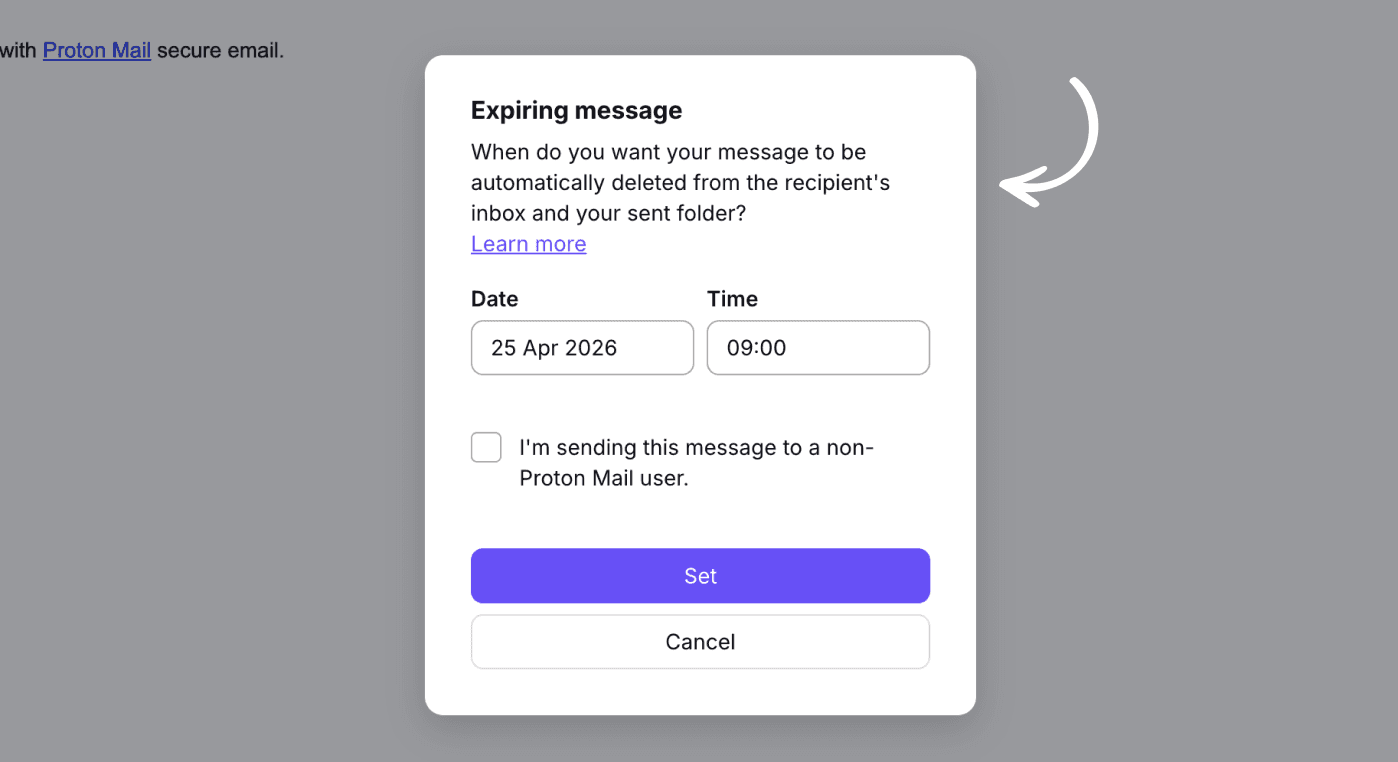
System decision: Message expiry is expressed through what will happen to the message, instead of through retention policy labels or protocol-level parameters.
What was chosen: "When do you want your message to be automatically deleted from the recipient's inbox and your sent folder?" — with a date and time picker, framed as a question about the message's future.
What was avoided: Retention policy labels and protocol-level expiry parameters that describe the mechanism rather than the outcome.
Complexity removed: Setting expiry does not require interpreting system logic — the action is described through its consequence, not its implementation.
Connection confirmation
Surfshark
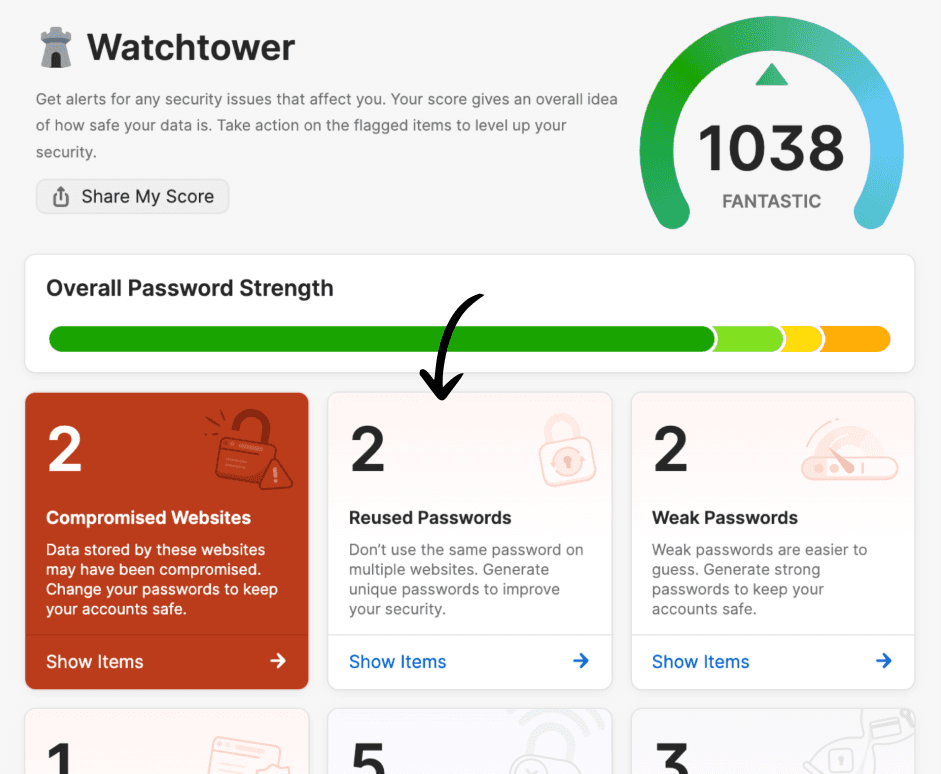
System decision: Connection status is communicated through its outcome for the user.
What was chosen: "You are now anonymous!" — a statement about the user's state.
What was avoided: Connection protocol confirmations, IP masking technical status, or tunnel establishment messages.
Complexity removed: Users know what the connection achieved without interpreting connection status or technical details.
Bringing System Clarity
Audit
In complex products, language often evolves implicitly. Labels, states, and terms start working because everyone involved “knows what they mean”. Over time, this shared understanding fragments.
Signals that indicate a system-language problem:
the same concept is explained differently by different team members
users ask what a label or status actually means
support tickets focus on interpretation, not functionality
internal documentation exists to explain product terminology
workflows rely on memory, not on system cues
A useful boundary: If a concept requires repeated explanation, training, or legend pages, meaning is no longer owned by the system.
System Rules
Internal language evolves implicitly. Labels and states start working because everyone involved knows what they mean — until that shared understanding fragments and meaning must be re-established each time.
Where system language drifts from real-world understanding:
where core concepts shift meaning depending on context or audience
where system states no longer correspond to how the task is understood outside the product
where transitions introduce meaning the user does not expect
where the same label requires different interpretation depending on who reads it
A useful boundary: When a concept requires explanation to be understood the same way by different people, meaning is no longer carried by the system language.
Decision ownership
Shared concepts resolve without interpretation — the team acts on what the system language already makes clear.
When different people read the same term differently, the decision has already left the system. The team must establish what something means before deciding how it should behave.
Questions that help maintain clarity:
Which existing concept does this belong to?
Does the system already define a term for this?
Is the meaning of this state clear from the interface, or does it require translation?
If nothing changes, will this introduce another way of reading the same concept?
Escalation is still needed when a decision introduces new meaning — a new concept, a new category boundary, or a new interpretation of an existing state. That is no longer a naming decision. It is a system-logic decision.
A useful boundary: When the same term can be read differently depending on who uses it, meaning has drifted beyond what the system language defines.
Common Decision Patterns
Most system decisions don't show up as design problems. They show up as questions like:
“Should we rename this?”
“Should we add another option?”
“Should we support a new case?”
These are not feature questions. They are questions about how meaning is defined in the system.
Before answering, pause and check:
Does this match how users already describe their work?
Does it make system language clearer, or introduce another layer of interpretation?
Does it reduce the gap between what the system says and what people understand?
If interpretation increases, the decision does not scale. When these signals appear, meaning has likely drifted:
users describe their task in terms the system does not use
system labels require context or translation to be understood
logic moves from the interface into verbal explanation
team discussions rely on "what we mean here" instead of what the interface shows
decisions require founder confirmation because terms are read differently
The question to ask:
"Does this bring system language closer to how people already think about this — or further away?”
If the answer requires explanation, the system language is no longer doing its job.
Conclusion
After a system grows, mismatches between system language and the real world rarely look dramatic. The product still works. Features still ship. What changes is how much meaning lives outside the system.
When labels, states, and options require explanation, clarity no longer scales. Decisions slow down not because they are hard, but because interpretation is required. Over time, this turns shared understanding into something fragile and person-dependent.
Matching the system to the real world is not about polish or preference. It is about whether the system can carry its own meaning as complexity grows. When it does, decisions stop accumulating around people. When it doesn’t, they quietly do.
This principle is less about changing the interface, and more about noticing where meaning drifted — and what that drift costs as the product scales.
Recognize this in your product?
Let's talk about what's behind it.