User Control and Freedom
As products grow, more actions quietly become irreversible.
Something gets submitted, removed, or changed — and the system proceeds as if certainty was guaranteed.
Exiting a flow means starting over. Undo becomes an exception, not a rule.
The product may still function, but it no longer absorbs mistakes as part of its normal behavior. Control doesn’t vanish suddenly — it erodes where recovery is no longer built in.
Definition
Some actions move the user forward without making it clear how to stop, change course, or undo what just happened. A choice feels simple in the moment, but its consequences become visible only after it is too late to reverse.
The interface guides people through a sequence of steps, yet offers little support when they want to pause or recover. Progress is easy to make, correction is not.
This changes how the product is used. People slow down, hesitate, or avoid actions that might lock them into a state they cannot easily escape.
Business Impact
Risk
Increases risk because the system treats actions as final by default, before users can safely confirm or revise them.
Client trust
Erodes trust because the system locks in choices without making reversibility visible at the moment of action.
Operational cost
Raises operational cost because the system turns early decisions into fixed outcomes that require support or manual intervention to change.
Example
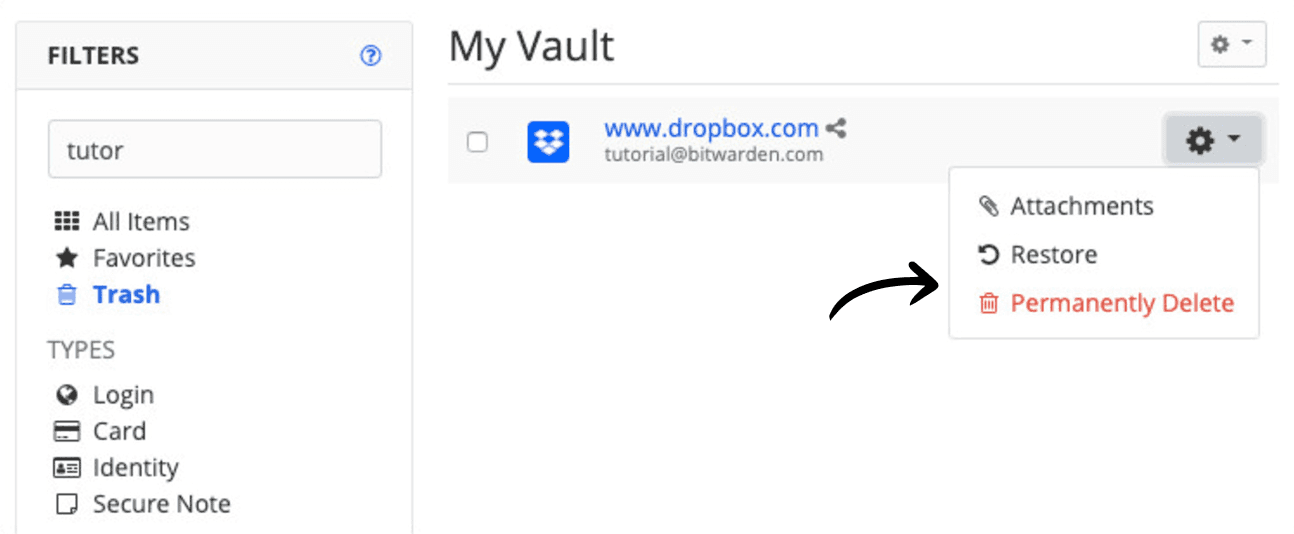
Recovering deleted items
Bitwarden
System decision: Deleting an item keeps it reversible until the user confirms permanent removal.
What was chosen: A Trash folder with two distinct actions — "Restore" to reverse the deletion, and "Permanently Delete”.
What was avoided: Immediate permanent deletion as the first removal.
Complexity removed: Users can delete without certainty, because the action remains reversible before it becomes permanent.
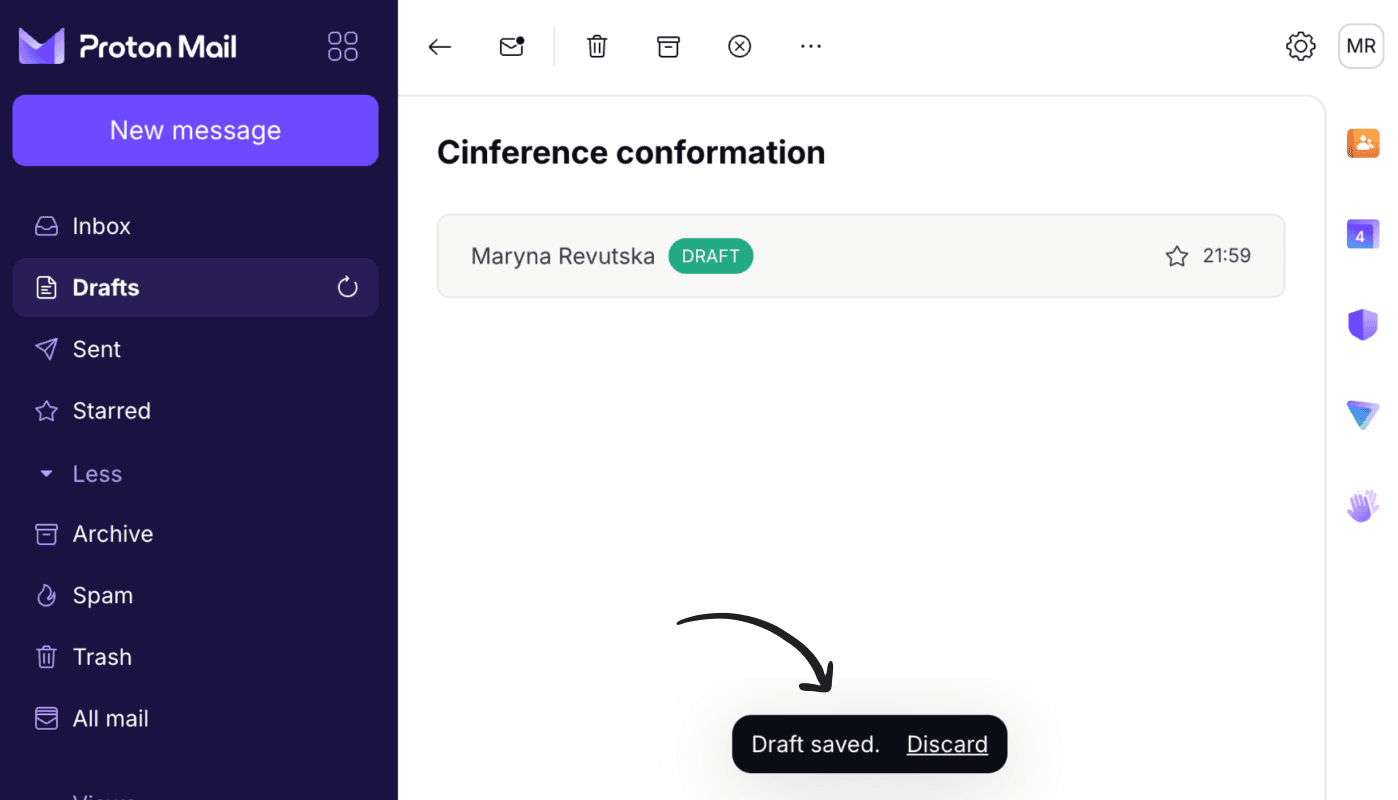
Unsent message recovery
Proton Mail
System decision: Closing an unfinished message keeps progress saved and the message recoverable.
What was chosen: A "Draft saved" confirmation and automatic saving of progress, with an explicit "Discard" option.
What was avoided: Treating exit as abandonment, with closing the compose window removing the unfinished message.
Complexity removed: Users can leave a message unfinished without losing their work, because exiting and discarding are two separate decisions.
Bringing System Clarity
Audit
In some systems, the moment an action becomes final is never clearly defined. A step is completed, but neither the user nor the team can say with confidence whether the outcome is still open to change.
This shows up when:
people pause before acting, even in low-impact situations
teams rely on extra confirmations instead of clear exits
requests to “undo what already happened” pile up in support
fixes require manual work rather than built-in recovery
internal discussions circle around whether something should still be reversible
A useful boundary: If the point of no return is not explicit, control is no longer a system property.
System Rules
The point at which an action becomes final is often not made explicit.
Finality is introduced through the flow itself — not through a visible boundary that the system carries.
What typically breaks:
where actions become final without a visible boundary
where exiting a flow is treated as completion instead of interruption
where reversibility exists in some places but not others without a clear rule
where the window to change a decision is unclear or inconsistent
where consequences appear only after the action is already committed
A useful boundary: If the system does not make the point of no return visible, control is no longer part of the system.
Decision ownership
Decisions remain local while the system keeps actions reversible within a clear boundary. The team can rely on the system to support change without redefining each case.
Once that boundary is unclear or inconsistent, decisions no longer stay local. The team must interpret whether an action can still be changed, and when it becomes final.
Questions that help maintain clarity:
Does this action become final at a clearly defined moment?
Is there a visible way to change or undo this after it is triggered?
Does the system treat exiting as cancellation, or as completion?
Is reversibility consistent across similar actions?
Escalation becomes necessary when a change shifts where commitment begins — by removing an exit, shortening the reversal window, or introducing finality where it did not exist before.
A useful boundary: The ability to change a decision depending on interpretation rather than a visible boundary means control is already outside the system.
Common Decision Patterns
Decisions about control often appear as small simplifications:
Should we treat this as done once they leave the screen?”
“Do we need to keep this editable after submission?”
“Should exiting count as cancelling?”
“Do we need an undo here?”
Each of these defines where the system stops supporting change.
In practice, control erodes:
actions are treated as final earlier than necessary
exiting a flow is interpreted as completion
reversal paths are removed to simplify edge cases
changing course is pushed into support or manual intervention
The system stops supporting change and starts enforcing commitment.
The question to ask:
“At what point does this become impossible to change?”
If that point is unclear, inconsistent, or happens earlier than expected, the system is enforcing commitment instead of supporting it.
Conclusion
When user control breaks, it rarely looks like a big mistake. It shows up when actions become final too early and changing course quietly disappears from the system.
User Control and Freedom shifts attention away from making the “right” decision and back to how decisions are treated. The issue is usually not user behavior. It’s when the system assumes that decisions won’t need to be changed.
Looking at where actions become final helps clarify what actually matters right now. It shows where the system supports change and where it starts locking things in — without turning this into a new initiative or a list of fixes.
Recognize this in your product?
Let's talk about what's behind it.